
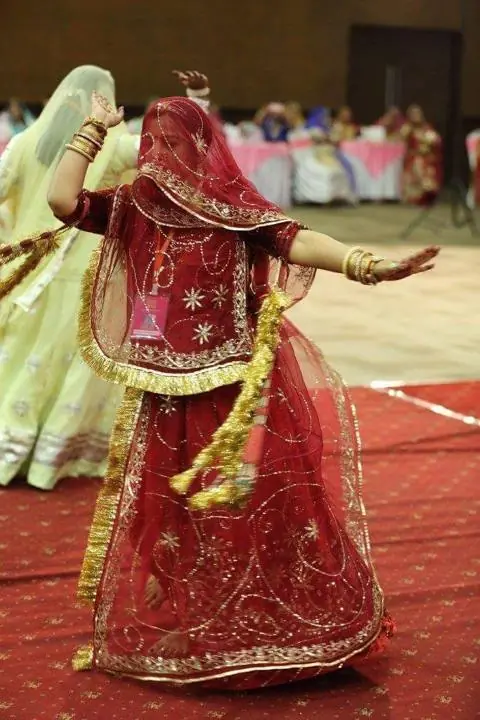
Ghoomar
The swirling dance of Rajput women, skirts flaring as they turn. You'll see it at weddings, festivals and the Dharohar show.
The dances, music, crafts, dress and words of Mewar, and where to see them for yourself.
Where to see it: the Dharohar show at Bagore Ki Haveli, the Lok Kala Mandal and Shilpgram.
The swirling dance of Rajput women, skirts flaring as they turn. You'll see it at weddings, festivals and the Dharohar show.
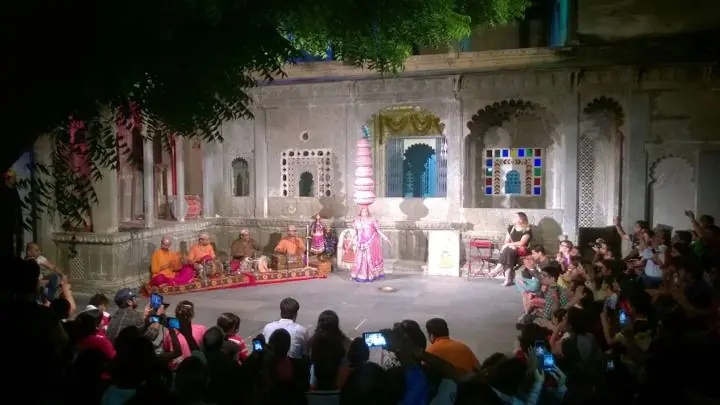
A dancer balances a tower of brass pots on her head, sometimes on the edge of a plate or a sword. The finale of most folk shows.
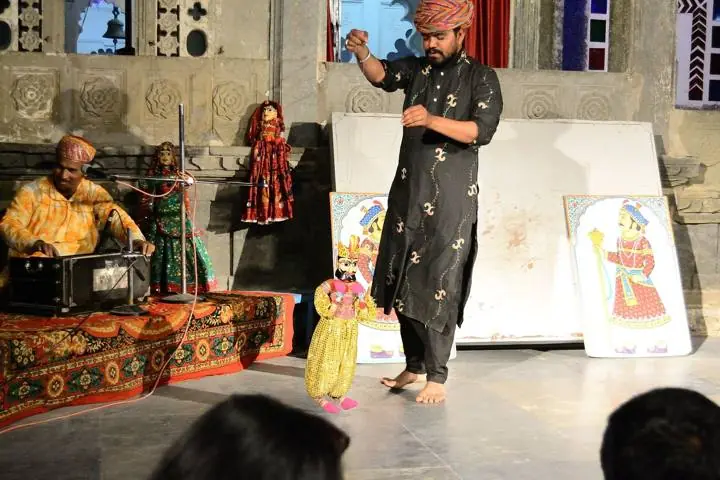
String puppets with painted wooden faces, worked by the Bhat community of puppeteers. Tales of kings, snake charmers and horse riders.
A forty-day ritual dance-drama of the Bhil community of Mewar, performed village to village after Raksha Bandhan. Rarely staged for tourists.
Women of the Kamad community play thirteen small cymbals tied to their bodies, in rhythm, while seated.
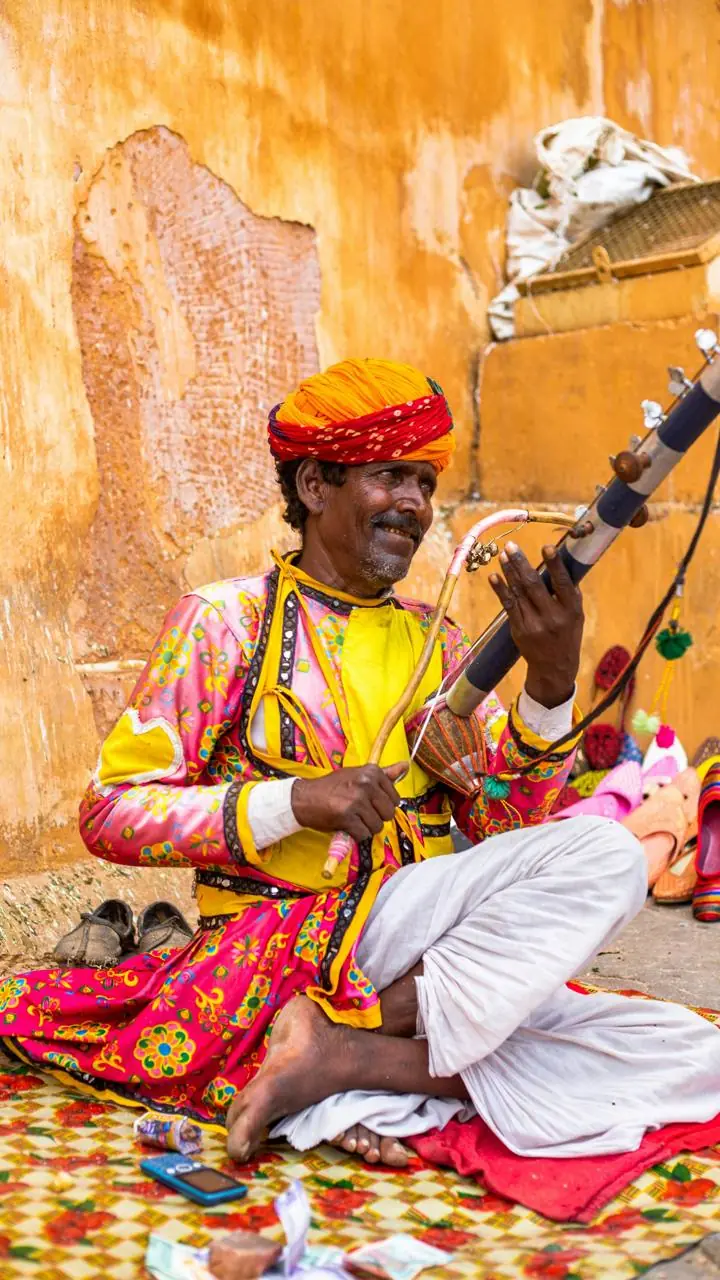
Ravanhatta, kamaicha and dholak carry the ballads of Mewar's heroes. Listen for them at Gangaur Ghat and in hotel courtyards.
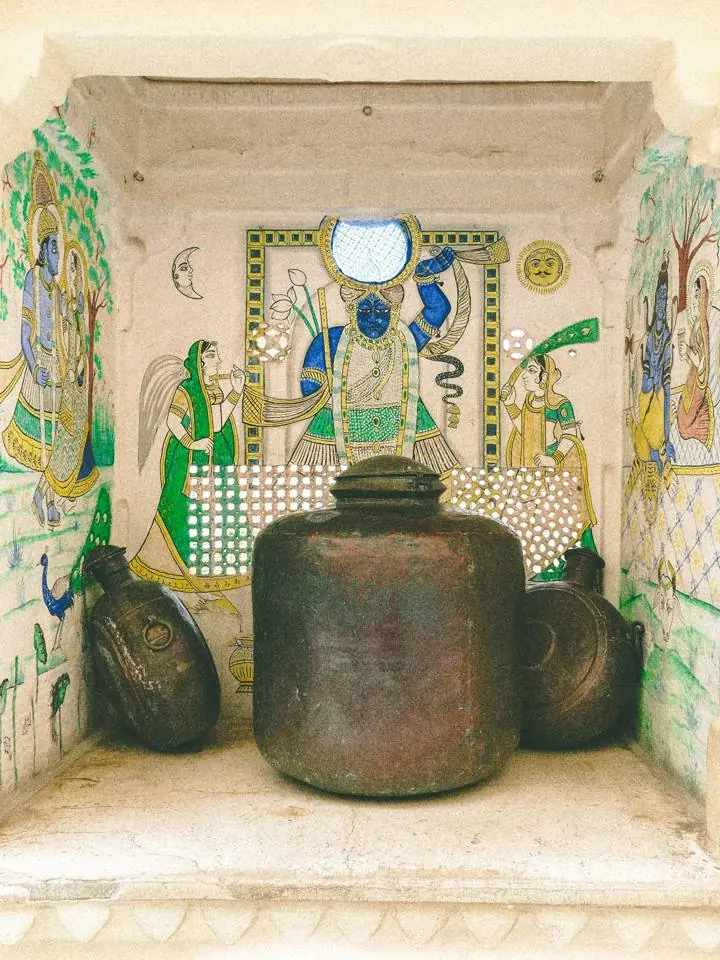
The Udaipur school of painting, at its height in the 17th and 18th centuries: court scenes, hunts and Krishna stories in mineral colours. Painters still work at Hathi Pol.
Large painted cloth backdrops for Shrinathji at Nathdwara: lotus ponds, cows and festival scenes.
Votive plaques of village deities, made by potters in Molela near Nathdwara.
Tie-dye in dots, and wave-patterned stripes worn at Teej. Sold by the metre in Bada Bazaar.
Painted puppets and toys from local workshops, the classic souvenir.
Heavy tribal silver around Ghanta Ghar, and thewa, gold worked onto glass, from nearby Pratapgarh.
Five words that will get you a smile.
Hello. The Mewar greeting, answered the same way.
Welcome. 'Padharo mhare des' means welcome to my land.
A respectful 'yes' or 'sir', used for elders and hosts.
Yes / no, said politely. 'Sa' adds respect to almost anything.
Very good. Use it after a meal.
The turban is identity in Mewar: colour and tie change with region, caste and occasion. See the giant collection at Bagore Ki Haveli.
Women wear the ghaghra, kurti and odhni; green leheriya for Teej, red and gold for weddings.
Embroidered leather slip-ons, made to soften with wear.
CultureFolk dance and puppetry at Bagore Ki Haveli, 7–8 pm daily.
CultureRajasthan's string-puppet tradition, live, in the city's folk-art museum.
 Workshops
Potters, weavers and painters at work; buy straight from the maker.
Ten days of crafts, folk music and food from across western India.
Shilpgram, HavalaNight-long worship and fairs at temples around Udaipur.
Shiva templesThe royal Holika Dahan at the City Palace, colours the next morning.
City Palace & the Old CityWomen carry decorated Gauri idols to the lake; boats, music and fireworks follow.
Gangaur GhatThe Rajput heritage of Mewar: folk dances such as Ghoomar, Bhavai and Kathputli, crafts such as Mewar miniature painting, Pichwai and Molela terracotta, festivals like Gangaur and Teej, and the Mewari language.
Ghoomar, the swirling dance of Rajput women, with Bhavai (dancing with a tower of pots on the head) and kathputli puppetry. See them at the Dharohar show at Bagore Ki Haveli.
Mewari, a form of Rajasthani, and Hindi. English is widely understood in hotels, shops and cafés in the Old City.
Tell us your dates and what you love. Our Udaipur team will suggest a plan, and can book stays, cars, guides and tables.