

 Day trips
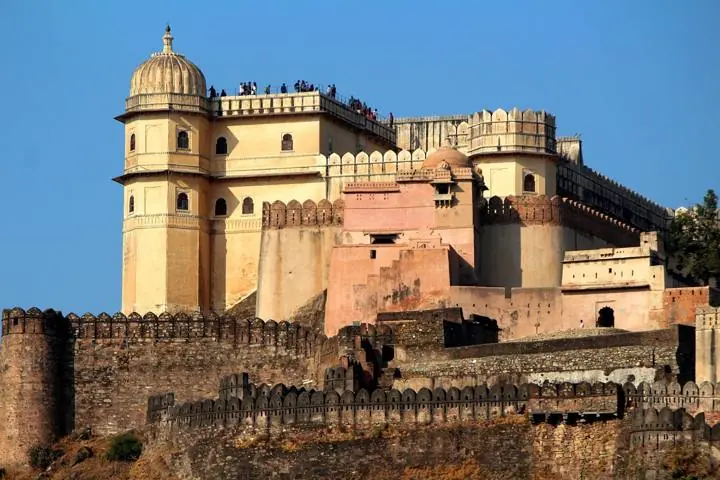
Kumbhalgarh Fort
A UNESCO hill fort whose walls run some 36 km over the Aravallis.
Check at gateFull day with drive
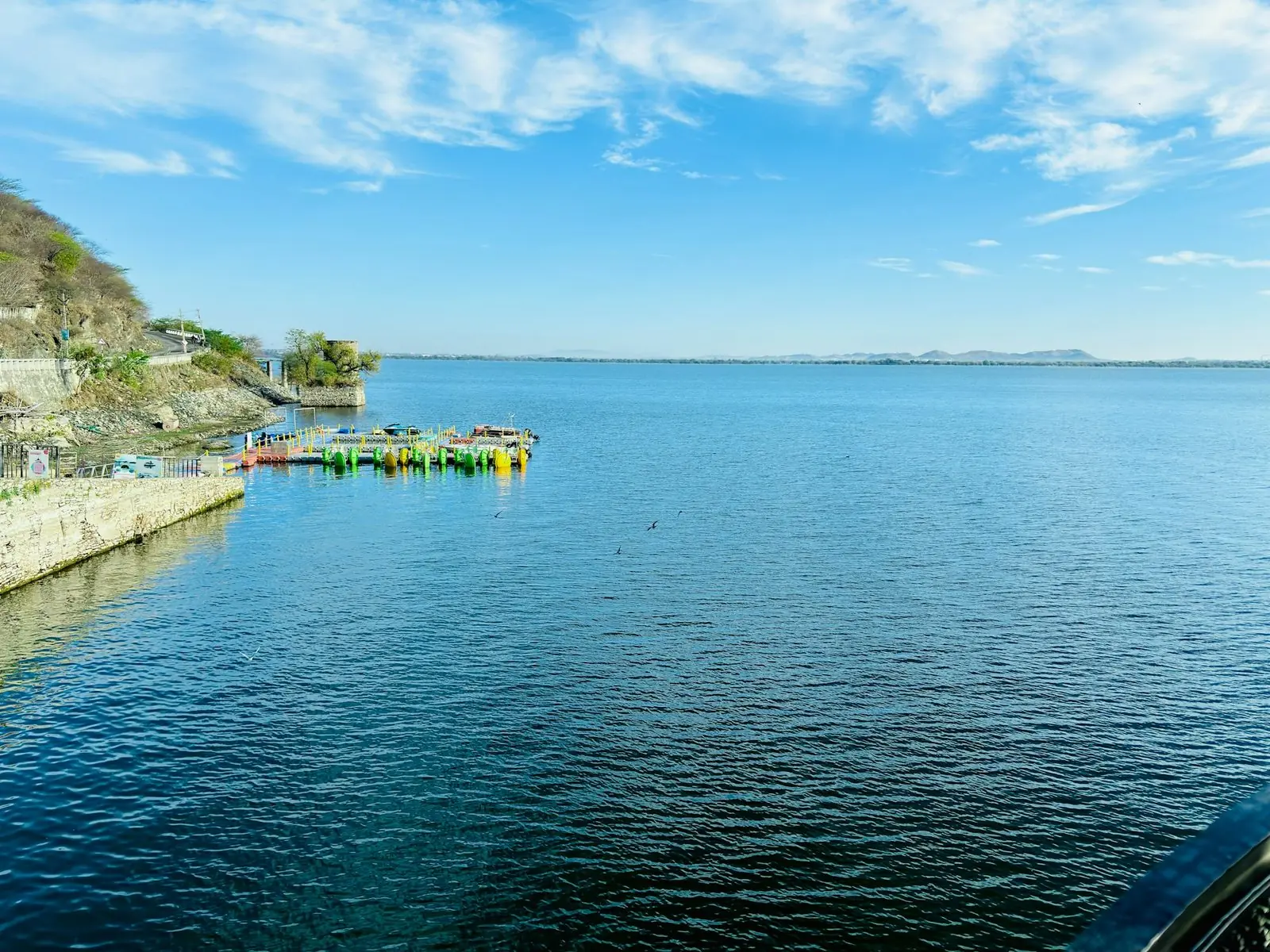
A 17th-century royal lake with carved marble pavilions on its dam.
Maharana Raj Singh I began building Rajsamand Lake in the 1660s by damming the valley north of Udaipur, and it was consecrated in January 1676. The lake is about 6.4 km long and 2.8 km wide.
At Nauchowki, on the dam, three carved marble pavilions stand over ghats that step down to the water. Nearby, 25 black marble slabs carry the Raj Prashasti, a Sanskrit history of Mewar written by Ranchhod Bhatt and often called one of the longest stone inscriptions in India.
Kankroli, on the southern edge of the lake, has the Dwarkadhish temple of the Pushtimarg tradition, whose idol was moved to its present site after the lake was finished.
Rajsamand Lake & Nauchowki is free to visit. Fees were last checked in October 2026 and change often, so confirm at the counter.
Rajsamand Lake & Nauchowki timings: Open all day.
Time needed at Rajsamand Lake & Nauchowki: 2–3 hours.
Best time to visit Rajsamand Lake & Nauchowki: morning or sunset, October–March.
Rajsamand Lake & Nauchowki is about 67 km north of Udaipur, Rajasthan.
Rajsamand Lake. Photo: Mandeep Singh, Unsplash
Day tripsA UNESCO hill fort whose walls run some 36 km over the Aravallis.
 Day trips
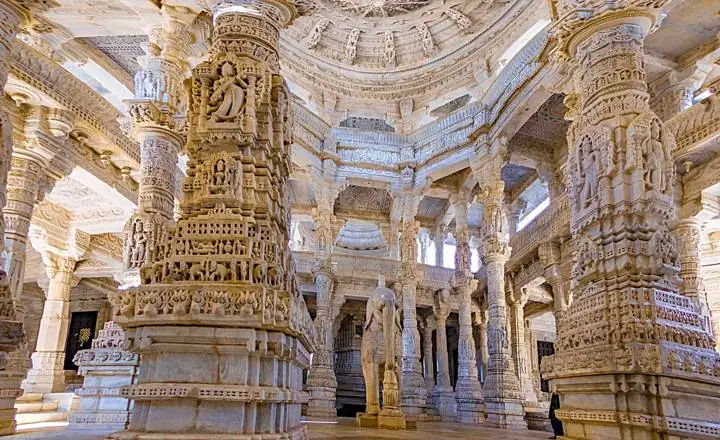
A marble temple of 1,444 carved pillars, no two alike.
 Day trips
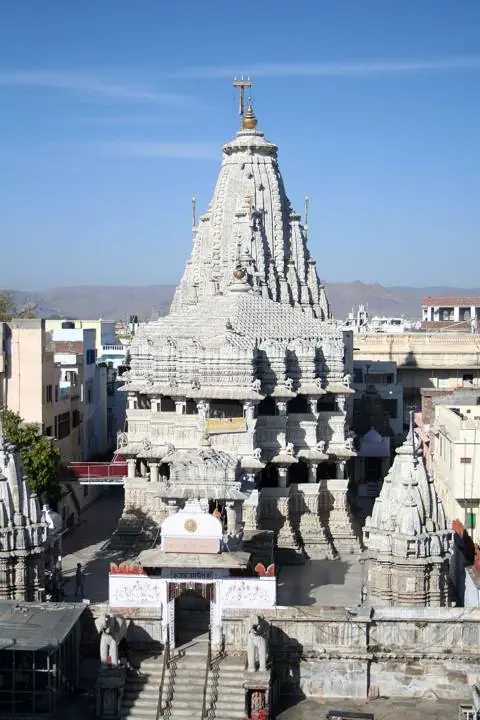
The Maharanas' family temple, and the carved Saas-Bahu temples nearby.
 Day trips
The yellow-earth pass where Maharana Pratap fought in 1576.